
Tooth Pain Doesn't Have to Ruin Your Week
Toothache Relief in Decatur, TX: What Helps Now and When to See a Dentist
Tooth pain has a way of taking over everything: your sleep, your meals, your focus. The fastest safe relief at home is a warm salt-water rinse, gently flossing around the tooth, a cold compress on the outside of your cheek, and an over-the-counter pain reliever taken as directed on the label if it's safe for you. Those steps calm the symptoms, but they don't treat the cause. A toothache that lasts more than a day or two, wakes you at night, or comes with swelling means something inside the tooth needs attention. This page walks through what helps tonight, what your pain pattern is telling you, and exactly when to call. And when you're ready, Christian Family Dentistry sees toothache patients same-day whenever our Decatur schedule allows.
Same-day appointments for tooth pain · Gentle, judgment-free care · English and Spanish spoken
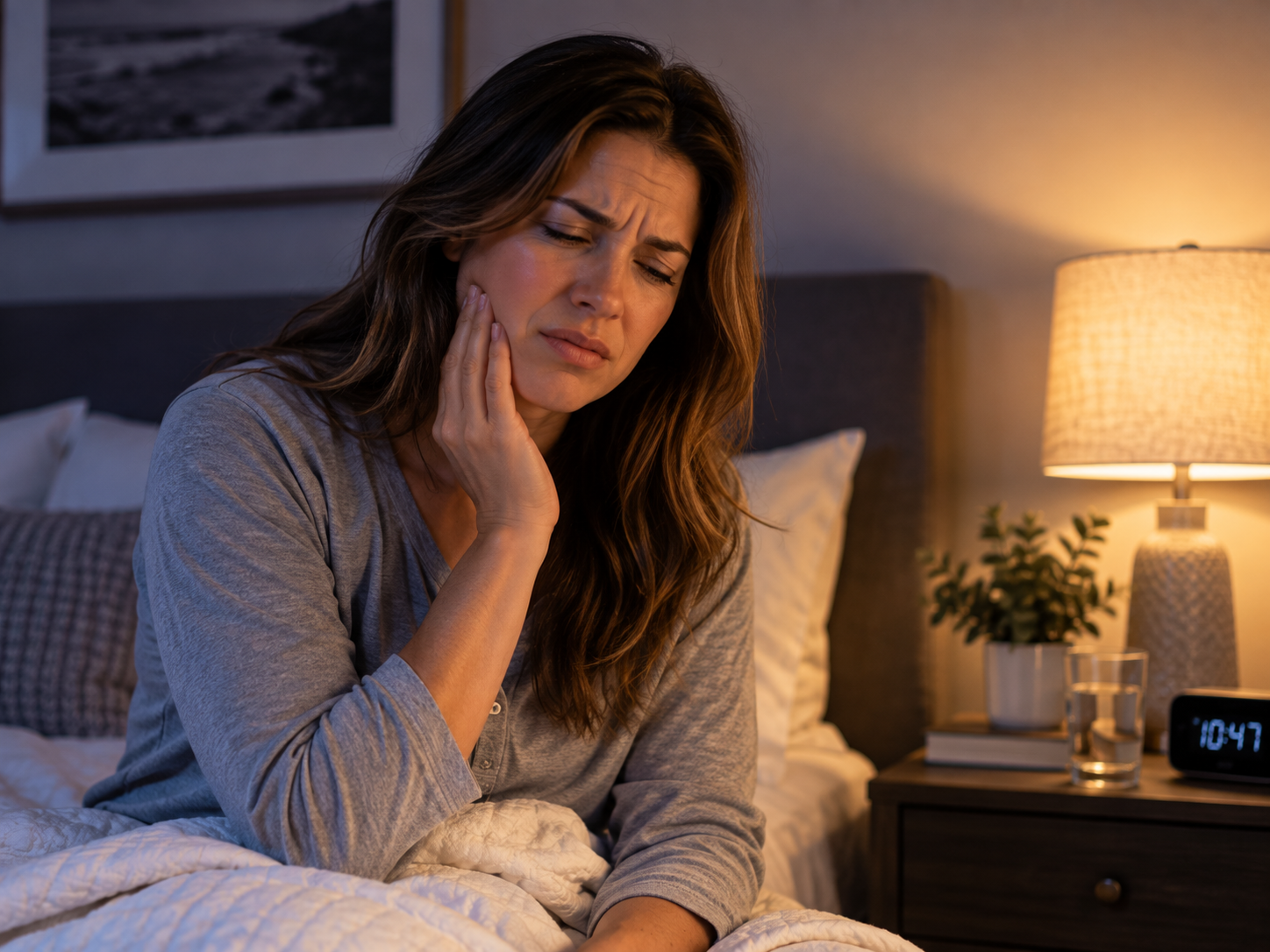
What Actually Helps a Toothache at Home
None of these fix the underlying problem, but they can make the wait for your appointment bearable:
- Warm salt-water rinse: swish gently and spit. It cleans the area and soothes inflamed tissue
- Floss gently around the tooth: a trapped piece of food pressing on the gum is a surprisingly common culprit
- Cold compress on the cheek: 15 to 20 minutes at a time, on the outside of your face, especially for swelling or injury
- Over-the-counter pain relief: anti-inflammatory medications are typically the first choice for dental pain. Take them only as directed on the label, and check with your doctor or pharmacist if you have kidney, stomach, heart, or bleeding conditions, or if you're pregnant
- Soft foods, other side: skip very hot, cold, sweet, or crunchy foods and chew away from the sore tooth
One myth to skip: never place aspirin directly on the tooth or gum. It doesn't work locally and can chemically burn the tissue.
Tooth pain lasting more than two days needs a dentist, not another night of home remedies.
That's the guidance from major medical sources, and it matches what we see in the chair: the earlier a toothache is diagnosed, the simpler and less expensive the fix tends to be.
What Your Toothache Is Telling You
Different pain patterns point to different problems. None of these is a diagnosis, that takes an exam and an X-ray, but they tell you how seriously to take it.
Throbbing Pain
Pulsing, constant pain often means significant inflammation or infection reaching the pulp, the living tissue inside the tooth. With swelling, fever, or a bad taste, treat it as urgent. A root canal is often what relieves it for good.
Pain When Biting Down
Pressure pain points to a crack, a cavity, a loose filling or crown, or infection around the root. Cracks in particular get worse with every chew, and early treatment is what keeps the tooth savable.
Hot or Cold Sensitivity
Brief zings with temperature usually trace to worn enamel, gum recession, decay, or recent dental work. Lingering pain after the trigger is gone is the warning sign. Sensitivity after a recent filling? Read our guide on tooth sensitivity after a filling.
Pain With No Cavity
Teeth can hurt without decay: grinding and clenching, sinus pressure referring to the upper back teeth, gum recession, or an erupting wisdom tooth. If several upper teeth ache during a cold or allergies, your sinuses may be the real cause.
Toothache Patterns and Urgency at a Glance

Why Is My Toothache Worse at Night?
It's not your imagination. When you lie flat, blood flow and pressure increase around your head, and inflamed tissue inside a tooth has nowhere to expand, so the throbbing gets louder. Add nighttime clenching and grinding, sinus pressure settling in, and the simple fact that there's nothing to distract you at 2 a.m., and a manageable daytime ache becomes the thing keeping you up.
To get through the night: sleep with your head elevated on an extra pillow, use a cold compress for 15 to 20 minutes before bed, avoid hot, cold, or sugary triggers in the evening, and take an appropriate over-the-counter pain reliever as directed if it's safe for you.
Then call us in the morning. Pain that reliably wakes you at night is one of the stronger signs that the nerve is involved, and that's not something another night of home remedies will fix.

How to Tell If a Toothache Is Serious
Use these three tiers as your guide. When in doubt, call: describing your symptoms takes two minutes and we'll tell you honestly where you land.
Pain Under 1 to 2 Days
Mild, new pain without swelling or fever can be watched briefly while home care keeps you comfortable. Call us to get on the schedule anyway: pain that comes and goes is still pain with a cause, and cavities don't reverse on their own.
Pain Past 2 Days, Fever, or Bad Taste
Pain lasting beyond two days, worsening pain, pain on biting, a foul taste, or a bump on the gum points to infection or a problem that's progressing. Call in the morning and we'll work you into the same day whenever the schedule allows.
Face or Neck Swelling, Trouble Swallowing
Swelling spreading into your face, eye, or neck, difficulty swallowing or breathing, or high fever with facial swelling can mean a spreading infection. Go to the emergency room first, then see us for the tooth. Our emergency dentist page covers the full breakdown.
Can a Toothache Go Away on Its Own?
Sometimes the pain does. The problem usually doesn't. Minor gum irritation, a popcorn hull working its way loose, a bruise from biting something hard: those can settle within a day or two. But pain coming from inside the tooth almost always means decay, a crack, or infection, and none of those heal themselves.
Here's the trap: a toothache that suddenly stops can actually be bad news. When the nerve inside a tooth dies, the pain often disappears while the infection keeps working quietly in the bone. Patients tell us "it stopped hurting weeks ago" right before an X-ray shows an abscess. Pain relief from a pill or from a dead nerve is not the same as a healthy tooth.
The good news is equally simple. A toothache caught early is usually a small fix: a tooth-colored filling, a crown, treatment for gum recession. Caught late, the same tooth may need a root canal or an extraction. If dental anxiety is part of why you've been waiting it out, tell us. Our sedation options exist precisely for patients who'd rather be anywhere else, and nobody here lectures anyone about how long they waited.
What a Toothache Visit Costs in Decatur
A toothache visit starts with an exam and an X-ray to find the cause. From there, the cost depends entirely on what the tooth needs: a filling, a crown, a root canal, or in some cases an extraction. Most dental insurance plans cover diagnostic exams well and pay a meaningful share of the treatment that follows. We verify your benefits and tell you the number before treatment starts.
No insurance? We offer an uninsured-patient discount and CareCredit financing, and we'll always give you options rather than a single take-it-or-leave-it plan. The one thing that reliably makes tooth pain more expensive is waiting.
Tired of hurting?
Call us, tell us what you're feeling, and we'll find you the first available appointment, same-day whenever we can.
(940) 304-0205 Send Us a MessageTooth Pain Questions We Answer Every Week
How can I sleep with a toothache?
Elevate your head with an extra pillow so pressure doesn't pool around the tooth, apply a cold compress to the outside of your cheek for 15 to 20 minutes before bed, avoid hot, cold, or sugary foods in the evening, and take an over-the-counter pain reliever as directed on the label if it's safe for you. Then call us in the morning: pain that interferes with sleep is a sign the problem needs treatment.
Can a toothache go away on its own?
Minor gum irritation can settle in a day or two, but pain from inside the tooth usually means decay, a crack, or infection, and those need treatment. Be cautious if pain suddenly stops: a dying nerve or a draining abscess can quiet the pain while the infection continues to spread.
Is ibuprofen or acetaminophen better for tooth pain?
Anti-inflammatory medications like ibuprofen are generally considered the first choice for dental pain because they target the inflammation causing it, and dental guidance notes that combining an anti-inflammatory with acetaminophen can be especially effective. Always follow the label, and ask your doctor or pharmacist first if you have kidney, stomach, heart, or bleeding conditions, or if you're pregnant. And remember that pain relief is a bridge to treatment, not a substitute for it.
Why does my tooth hurt when I bite down?
Pain on biting usually comes from a crack, a cavity, a loose or damaged filling or crown, gum disease, or infection around the root. Because chewing keeps stressing the problem, bite pain tends to worsen rather than fade, and it's one of the symptoms we recommend having examined promptly.
Can sinus pressure feel like a toothache?
Yes. The roots of your upper back teeth sit close to your sinuses, so sinus inflammation from a cold or allergies can register as tooth pain, usually a dull ache across several upper teeth at once rather than one sharp spot. If the "toothache" arrived with congestion and affects multiple teeth, sinuses are a real possibility. An exam and X-ray sort out which one you're dealing with.
How long should I wait before calling a dentist about tooth pain?
Major medical guidance says tooth pain lasting more than one to two days should be evaluated, and sooner if you have swelling, fever, a bad taste, or pain on biting. If painkillers are controlling the pain but it keeps coming back, that still counts: relief that wears off means the cause is still there.
Is a swollen face from a tooth an emergency?
Yes. Facial swelling from a tooth means infection is spreading beyond the tooth and needs same-day care. If the swelling is moving toward your eye or neck, or you have any trouble swallowing or breathing, go to the emergency room first, then see a dentist to treat the tooth that caused it. Our emergency dentistry page explains exactly where to go and when.
One Call Between You and Real Relief
Home remedies buy you hours. Treatment ends the toothache. Call Christian Family Dentistry in Decatur and let's find out what your tooth has been trying to tell you.
(940) 304-0205Address: 2100 South Reeves Lane · Decatur, TX 76234
Stop Managing the Pain. Start Fixing It.
Every toothache has a cause, and every cause has a fix. Call us, get seen, and get back to eating, sleeping, and thinking about literally anything else.
Call (940) 304-0205Christian Family Dental
A team working to ensure you receive the best treatment.
OFFICE HOURS:
Mon – Thurs: 9am – 5pm
Friday: 9am – 2pm
(break 12pm – 1pm daily)
Closed Saturday & Sunday

© 2022 Christian Family Dental. All Rights Reserved.
Site by InnovaFire Web Design Solutions
© 2022 Christian Family Dental. All Rights Reserved.
Site by InnovaFire Web Design Solutions